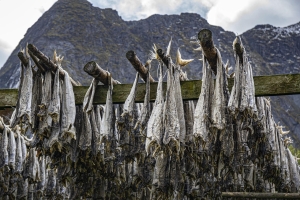
Drying
Drying is one of the oldest forms of food preservation. No water, no spoilage.
There are a number of ways to attain this, and most of them involve slicing the whatever-you-are-drying very, very thin.
One of the easiest is to simply dry the thin slices on the counter, turning occasionally. Similarly, a series of shelving of thin gauze, or woven trays, will allow a more space-efficient version of countertop drying. String drying involves tying bunches of herbs or mushrooms or meat or whatever one is drying up with a string, and hanging it from the ceiling. It is amazingly space-efficient and allows for good airflow. A similar technique involved braiding the stems of plants and hanging them from the doorframe, and garlic, onions, and hot chilis are often braided thusly.
Drying on an oven on low, low heat is also viable.
For many cultures, having vast amounts of dried food was the meaning of wealth, and dried tidbits can be used in teas, soups, stews, or gently rehydrated in the deglaze of quenching the pan. They can also often be eaten as-is.
Consider packing away a few years' worth of dried food in little jars, and see if it eases the hard times.
If you found this page useful, please consider donating.
• Back to the Food Vault